The Other Side of the Door
In the last post we looked at the host. Fire, food, water, a towel, and a kind word for the traveler who comes in from the cold. But the old law of hospitality was never a one way street. The same poem that tells the host what he owes also tells the guest how to carry himself once he is inside.
A good welcome only works if the person being welcomed deserves it. That part of the teaching gets talked about a lot less, but our ancestors cared about it just as much.
Watch, Listen, and Speak Little
The Hávamál tells the guest to come to the meal with his eyes and ears open. He should listen more than he talks and pay attention to the people around him. A wise man, the poem says, keeps quiet at someone else’s table and learns what he can.
This was common sense on the road. You were in another man’s hall, under his roof and his rules. Loud talk and bragging could turn a warm night into a fight. Keeping your mouth shut and your wits about you was how you stayed welcome and stayed safe.
Go Easy on the Ale
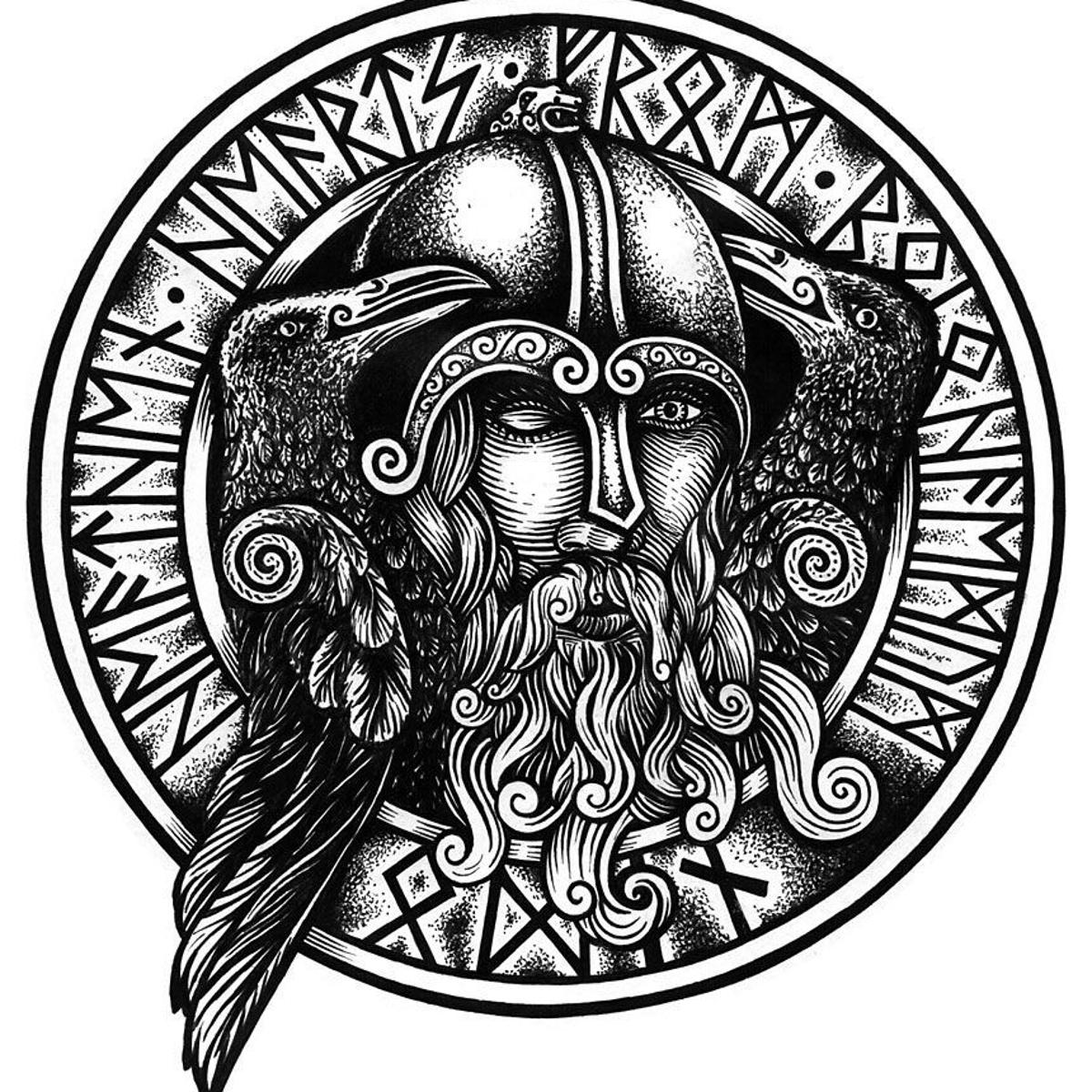
The High One is blunt about drinking. He says ale is not as good for a man as people claim, and the more you drink the less sense you keep. He even speaks of a heron of forgetfulness that hovers over a drinking feast and steals a man’s mind. Odin admits he learned this the hard way, getting drunk in the hall of the giant Fjalar.
The lesson for a guest is simple. Enjoy what is poured for you, but do not become the problem your host has to deal with in the morning.
Know When to Leave
One of the most honest lines in the whole poem is about overstaying. A guest should move on and not sit in one place too long. Even a dear friend becomes a burden if he lingers at another man’s hearth day after day.
Every host knows this is true, and every good guest should too. The best visits end while everyone still wants more. Leaving on time is its own kind of respect.
A Gift for a Gift
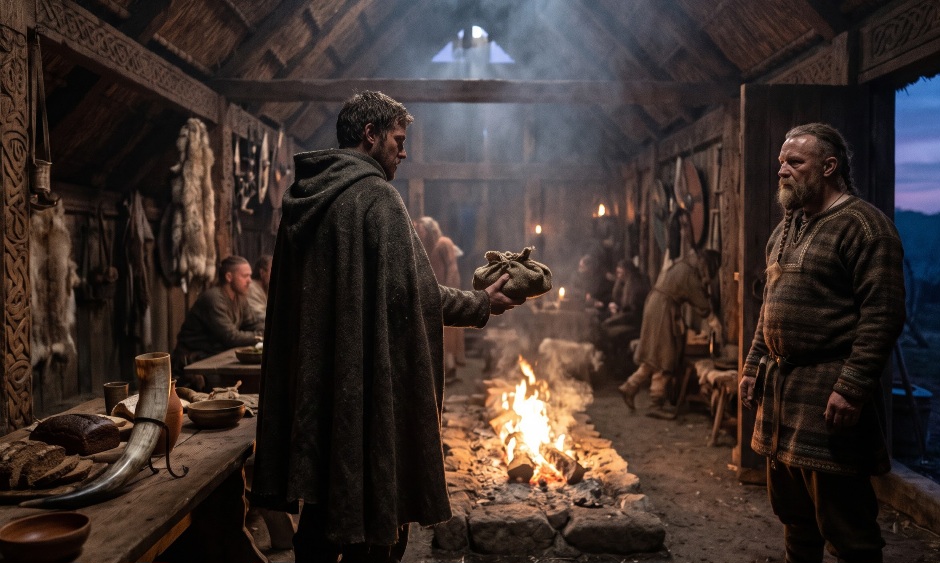
The heart of the guest’s duty is giving back. The Hávamál says friends should gladden each other with gifts, clothing and weapons, and that those who trade gifts stay friends the longest. It also says a gift always looks for a gift in return.
That does not mean keeping a ledger. The poem makes it clear the gift does not have to be big. It says you do not always need to give great things, and that with half a loaf and a shared cup a man can win a friend. What matters is that the bond gets fed from both sides.
A guest who only takes is not really a guest. He is a burden. A guest who brings something, helps clear the table, or repays the favor down the road is building frith.
Rig Walks the Roads
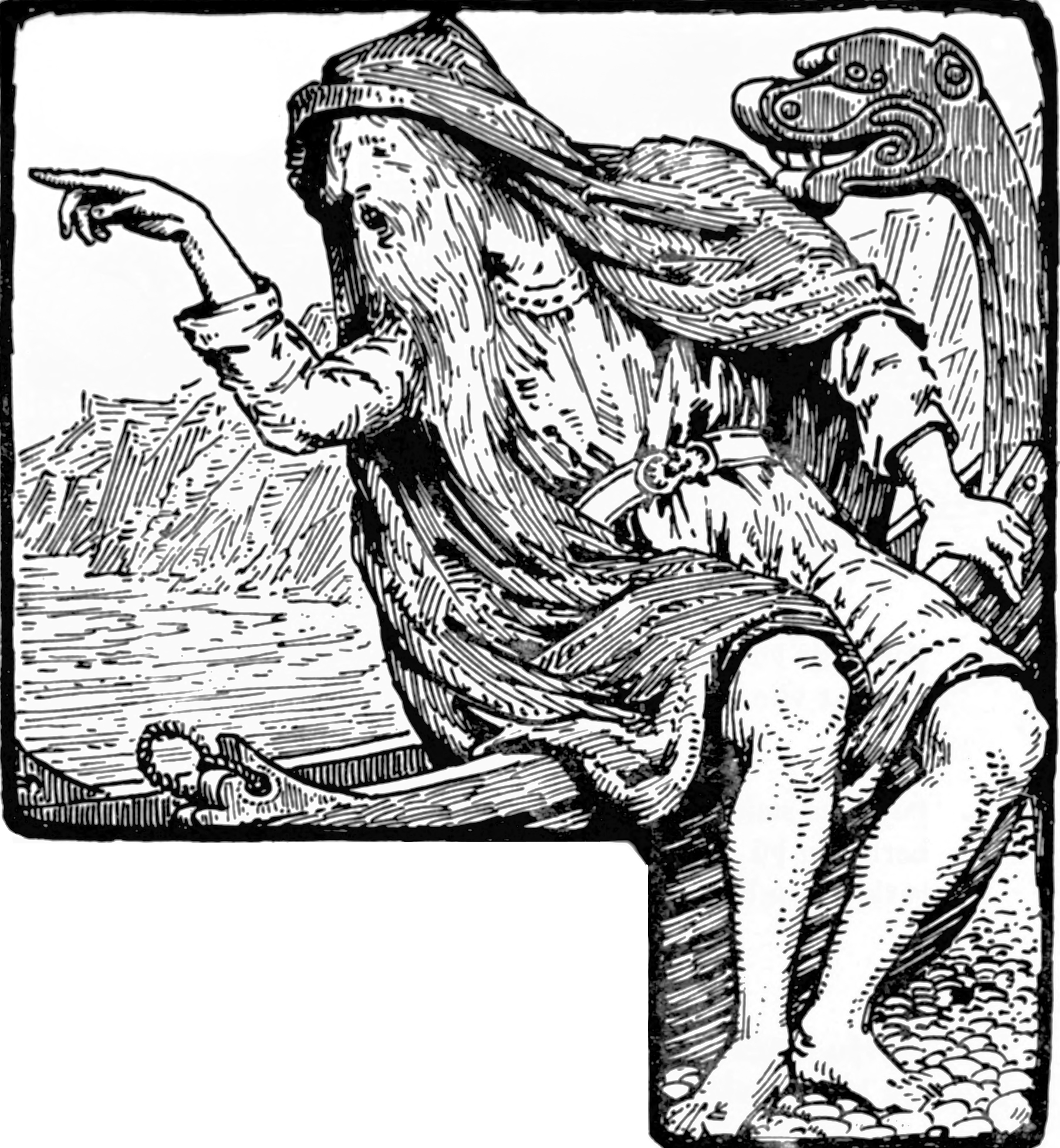
The Rígsþula gives us a picture of this from the other direction. A wanderer named Ríg, who the poem’s prose intro identifies as Heimdall, walks the green roads and stops at three homes. The first is a poor hut, the second a farmhouse, the third a fine hall.
At each one the people share what they have. In the hut it is coarse bread and broth. In the hall it is fine food and wine. Ríg sits with them, gives them counsel, and stays three nights at each before moving on. The poem tells us that from these visits came the different households of the people.
What stands out is that every home gave what it could, and the guest honored each one the same way. He did not sneer at the poor table or fawn over the rich one. He came, he gave back, and he moved on. That is the guest at his best.
Why It Still Matters
Most of us are guests far more often than we are travelers crossing mountains. A friend’s house for dinner. A gathering where you are the new face. A holiday table that is not yours.
The old advice still fits. Show up with something, even if it is small. Listen more than you talk. Do not drink yourself into trouble. Help out. And know when it is time to go home.
A host opens the door, but it is the guest who decides whether that door stays open next time. Hospitality only works when both sides keep their end of it.
Sources
- Hávamál (overview and background)
- Hávamál, Henry Adams Bellows translation (sacred-texts.com)
- Rígsþula (the story of Ríg’s journey)
Read the first part: Heathen Hospitality and the Guest in the Hávamál