Honoring the Ancestors, Part 1
Ask most people what they know about the old Norse faith and you will hear about Odin, Thor, longships and Valhalla. What you hear about a lot less is the part that sat closest to home for the everyday farmer, fisherman and mother of a household. That was the ancestors. Long before anybody rode out to a great temple, the people of the North were pouring ale on the mound behind the house and speaking to the ones who came before them.
This is the start of a series on ancestor worship in our tradition. Some folks prefer the word veneration, and that is fine. Either way, it means the same thing to me: the dead are not gone and forgotten. They are still family, and family gets remembered, fed and spoken to.
The Dead Were Never Far Away
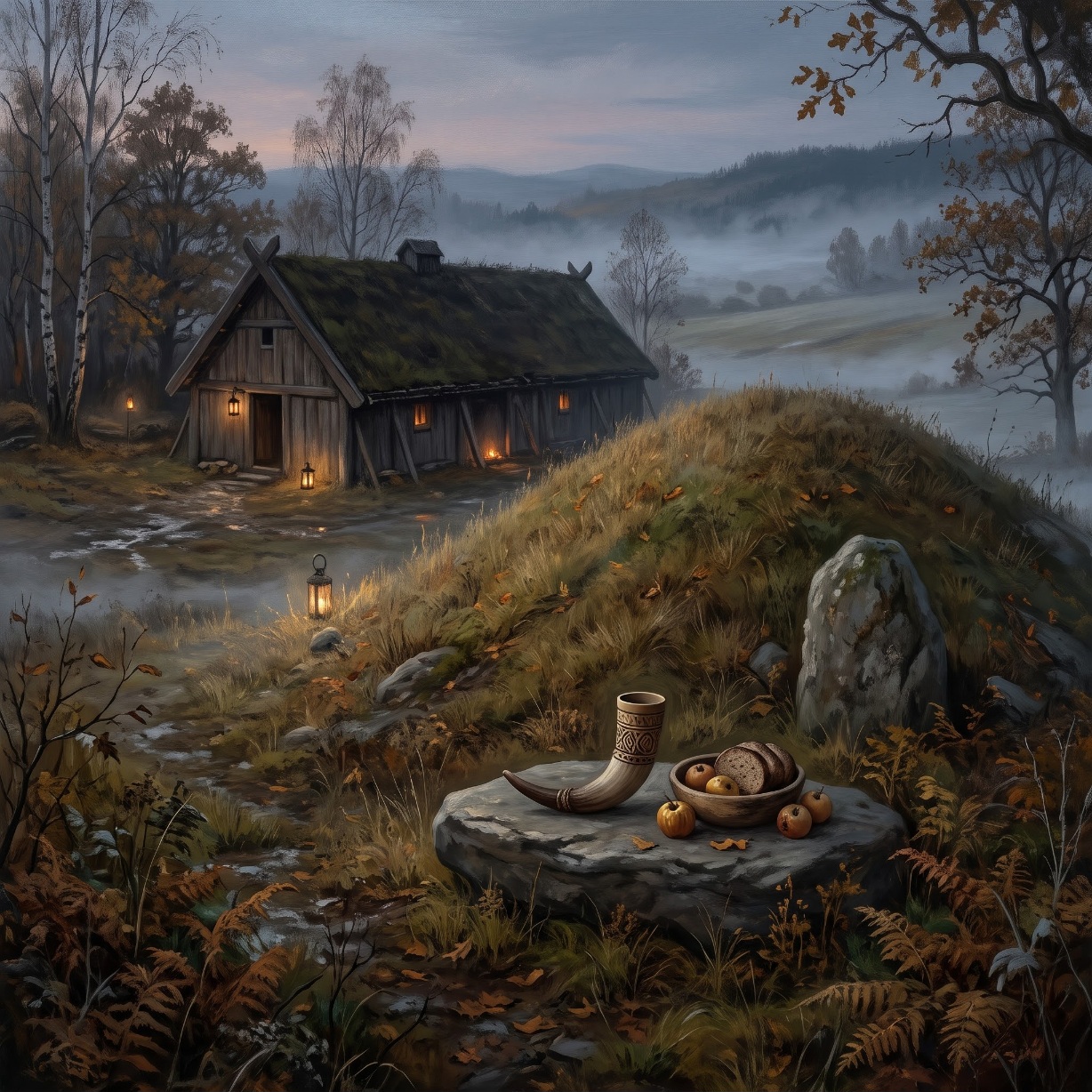
In the old world, the line between the living and the dead was thin. Families buried their own close to the farm, often in a mound you could see from the door. The dead stayed part of the land and part of the household. When the harvest came in, they got a share. When a child was born, the name often came from a grandparent or great grandparent, because the old folk believed something of that person carried forward with the name.
The Hávamál, the sayings of Odin, puts it as plain as it gets. In the old Bellows translation, stanza 76 reads:
Cattle die, and kinsmen die,
And so one dies one’s self;
But a noble name will never die,
If good renown one gets.
That stanza is the heart of it. Your body ends. Your reputation, your deeds and the way you treated people do not. The ancestors live on in what they did, and in us remembering it.
The Álfar and the Dísir
Two groups of spirits show up again and again when you dig into the lore.
The álfar, usually translated as elves, were not the little sparkly creatures from storybooks. They are close cousins of the land and house wights, and many scholars tie them to the spirits of the dead, especially male ancestors resting in the mounds. In autumn, after the crops were in and the animals were fattest, families held the Álfablót, an offering to the elves. It was not a big public feast. It happened at home, on the farm, and the lady of the household ran it. Because the álfar were so closely connected to ancestors and to the health of the family, a lot of people today see it as an ancestor rite at its core.
The dísir are the female side. They were protective spirits tied to fate and to the family line, the mothers and grandmothers who kept watching over their kin. They had their own offering, the Dísablót, held during the Winter Nights or around the spring equinox depending on the region. In Sweden it grew into a big public event, but in most places it stayed a family gathering.
Then there is Mothers’ Night at the start of Yule, which the Anglo-Saxons called Modraniht. Scholars have long linked it to the Dísablót. A night set aside just to honor the mothers who came before you. I think that is a beautiful thing, and I wrote about it in more depth in Mothers’ Night: The Women Who Watch Over the Kin.
Why This Still Matters
We live in a world that throws everything away, including its old people. Grandparents end up in homes nobody visits. Family stories die at the kitchen table because nobody asked. Kids grow up not knowing the names of their great grandparents.
Ancestor worship pushes back on all of that. It says the people who came before you matter. Their struggles put you where you are. That is orlog, the ground they laid down that you now stand on. Their mistakes are lessons you do not have to learn the hard way. Their strength is part of yours.
And it is not only about blood. Most of us have people who shaped us who were not kin at all. A teacher, a mentor, a pastor, a boss who saw something in you when nobody else did. I count those people among my honored dead too. Frith and loyalty were the glue of the old world, and those bonds do not stop at the family tree.
Where This Series Is Going
Over the next few posts I want to walk through this practice step by step:
- Setting up a simple ancestor shelf or altar at home
- What to offer and how to do it without making it complicated
- The Álfablót and Dísablót in more detail
- How to honor ancestors you never knew, or ones you had a hard time with
- Keeping the family stories alive so they get passed down
You do not need a temple or a big group to start. You need a quiet spot, a little something to give, and the willingness to say their names out loud. That is how it was done on the farm a thousand years ago, and it works just the same today.
Hail the ancestors.