Honoring the Ancestors, Part 2
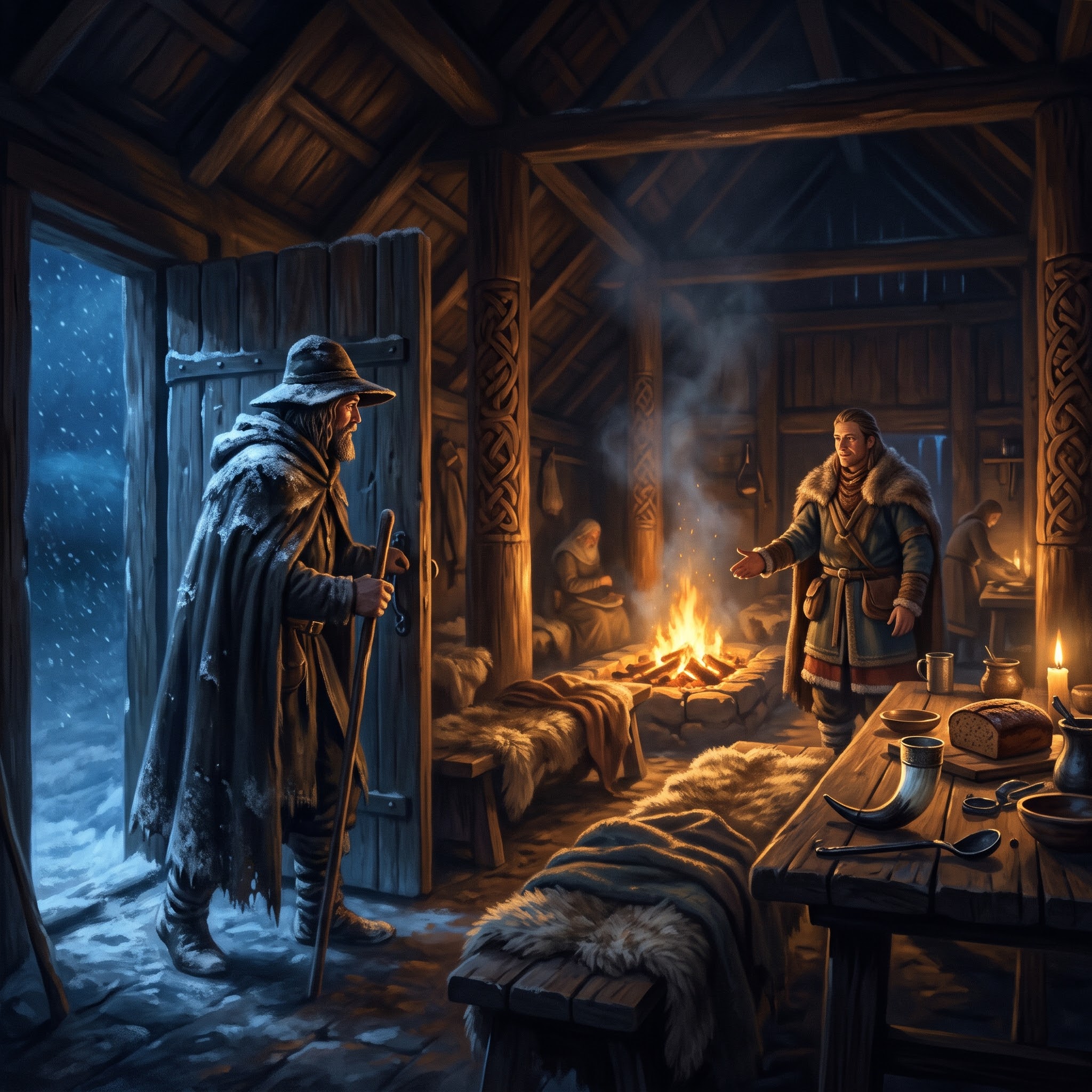
There is a mountain in the west of Iceland called Helgafell, the Holy Mountain. The saga of the people of Eyri says a settler named Thorolf held it so sacred that nobody was allowed to look at it without washing first. He believed that when he and his kin died, they would go into that mountain. And the saga says that one autumn night, a shepherd saw the side of the mountain open up. Inside there were big fires and the sound of a feast, and he heard Thorolf’s son Thorstein being welcomed in and given a seat across from his father. Thorstein had drowned at sea that same night.
That story says a lot about how our ancestors saw their dead. The dead had a place. You knew where they were. You could point to it from your own door.
Most of us do not have a holy mountain or a burial mound behind the house. But we can still give our dead a place. That is what an ancestor shelf is for. In Part 1 we looked at why ancestor worship was the everyday heart of the old faith. Now let’s get practical.
Why Have a Shelf at All?
You can honor your ancestors anywhere. You can raise a cup to them at the dinner table or say their names out loud on a walk. But having one set spot does something for you. It is a reminder every time you walk past it. It gives you somewhere to go when you want to talk to them. And it tells everyone who comes in your house that in this home, the dead are still family.
It does not have to be big or fancy. A lot of people start with a corner of a bookshelf, the top of a dresser, or a small wall shelf. What matters is that it is theirs and that you take care of it.
Picking the Spot
- Somewhere you see every day. A shelf you never look at gets forgotten, and so do the people on it. The living room, the kitchen, or a hallway you walk through are all good.
- Somewhere it will not get knocked around. Keep it out of the way of kids running through and the dog’s tail.
- Somewhere you can have a small flame. If you plan to burn a candle, keep it away from curtains and anything that catches. A battery candle works fine if you are worried about it.
- Close to the hearth if you can. In the old days the hearth was the center of the home. If you have a mantel or a spot near the kitchen, that fits the old way nicely. We wrote about the hearth in The Odinist Hearth.
What Goes On It
There is no one right list. Start with what you have. Here are the things most people use:
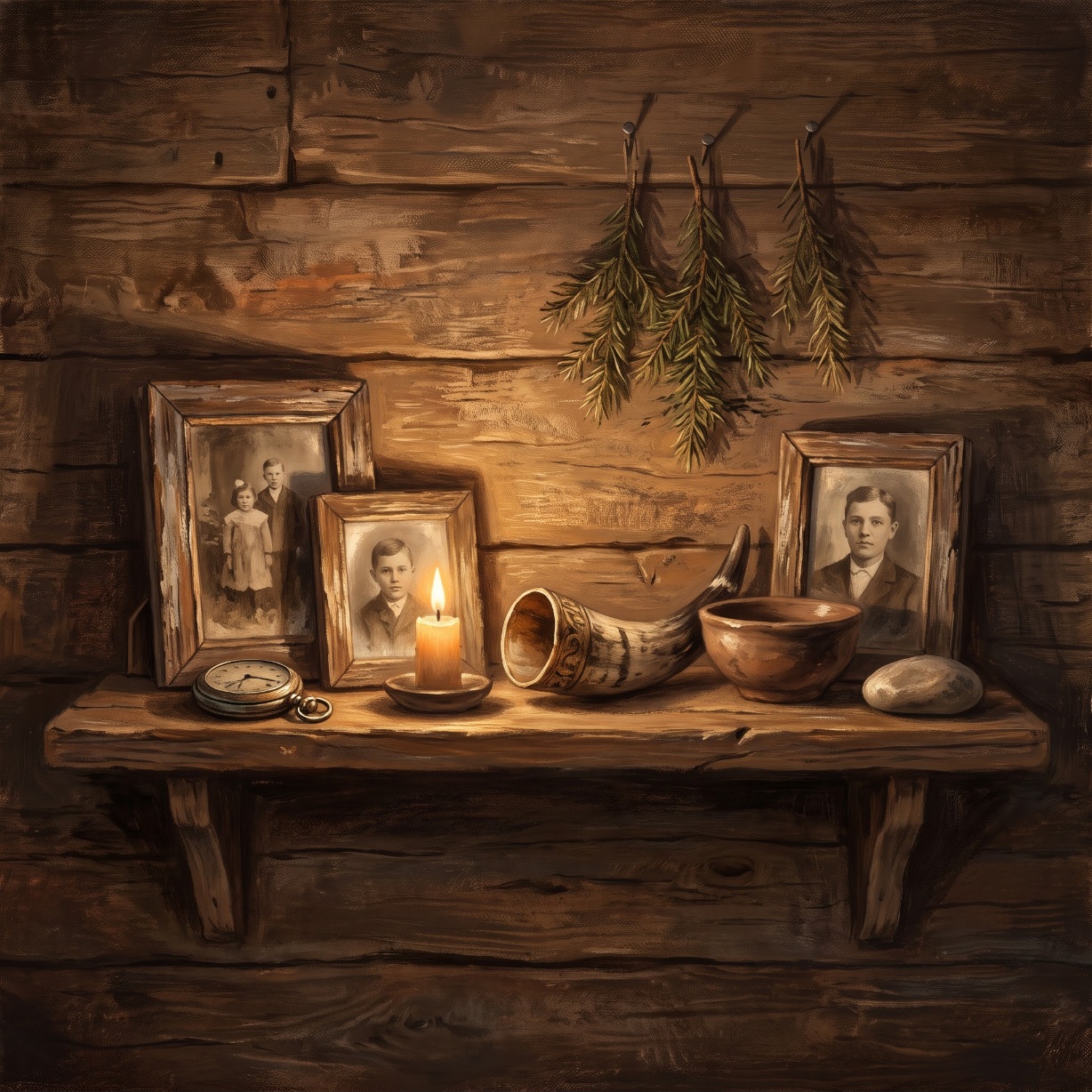
- Photos. Pictures of parents, grandparents, and anyone further back you can find. Old black and white photos are perfect. Only put up people who have passed. Keep pictures of the living somewhere else.
- Something that belonged to them. A watch, a ring, a pocketknife, a rosary, a recipe card in their handwriting, a tool from the shop. Things they touched carry a lot of weight.
- Their names. If you do not have photos, write their names on a card or a piece of wood. A simple family tree works too. Names matter. Saying and seeing them is half of keeping someone remembered.
- A candle or small light. Light it when you sit down to talk to them or leave an offering.
- A cup and a small bowl. These are for offerings, which we will cover in the next part. A small horn, a shot glass, a little bowl from the kitchen, anything works. Just keep them for the ancestors and nothing else.
- Something from the old country or the land. If you know where your family came from, a stone, some soil, a flag, or a picture of the place is a nice touch. If you do not know, a stone from the land you live on now is just as good.
What If I Do Not Know Much About My Family?
A lot of people do not. Families get split up, people move, records get lost, and some folks were adopted or never knew one side. That does not shut you out. You can honor your ancestors as a whole, all the ones whose names you will never know but whose blood and choices led to you. A simple card that says “To my ancestors, known and unknown” is enough.
And like we said in Part 1, it is not only about blood. A mentor, a teacher, a friend who was like a brother, the people who raised you, they can all have a place on the shelf. Honor the ones who made you who you are.
Setting It Up the First Time
When you put the shelf together, take a few minutes and do it with some care. Here is a simple way:
- Clean the spot well. Wipe it down and clear off anything that does not belong.
- Set out the photos, the names, and the things that belonged to them.
- Light the candle.
- Pour a little drink in the cup. Water, coffee, beer, mead, or whatever they liked.
- Say out loud that this place is for them. Something as simple as, “This is your place in my home. You are remembered here.” Then say each name you know.
- Sit with it a minute. Tell them what is going on in your life. It is fine if it feels strange the first time. It gets easier.
Keeping It Up
The worst thing you can do is set up a shelf and let it gather dust. Dust it once a week. Do not let old drinks sit there and go bad. Pour them outside on the ground when they are done, never down the sink. Add new pictures and names as you learn more about your family. On birthdays, death days, and holidays like Mothers’ Night and Yule, give them a little extra attention.
Most of all, use it. Stop by and say good morning. Tell them when something good happens. Ask for strength when things get hard. Treat them like family, because they are.
Next time we will talk about offerings: what to give, how often, and how to keep it simple.
Hail the ancestors.